Foot blisters: safe care and when to seek help
How to protect a friction blister, avoid infection and recognise symptoms that need medical attention.
Clinic editorial team · Educational guide · Pending clinical review
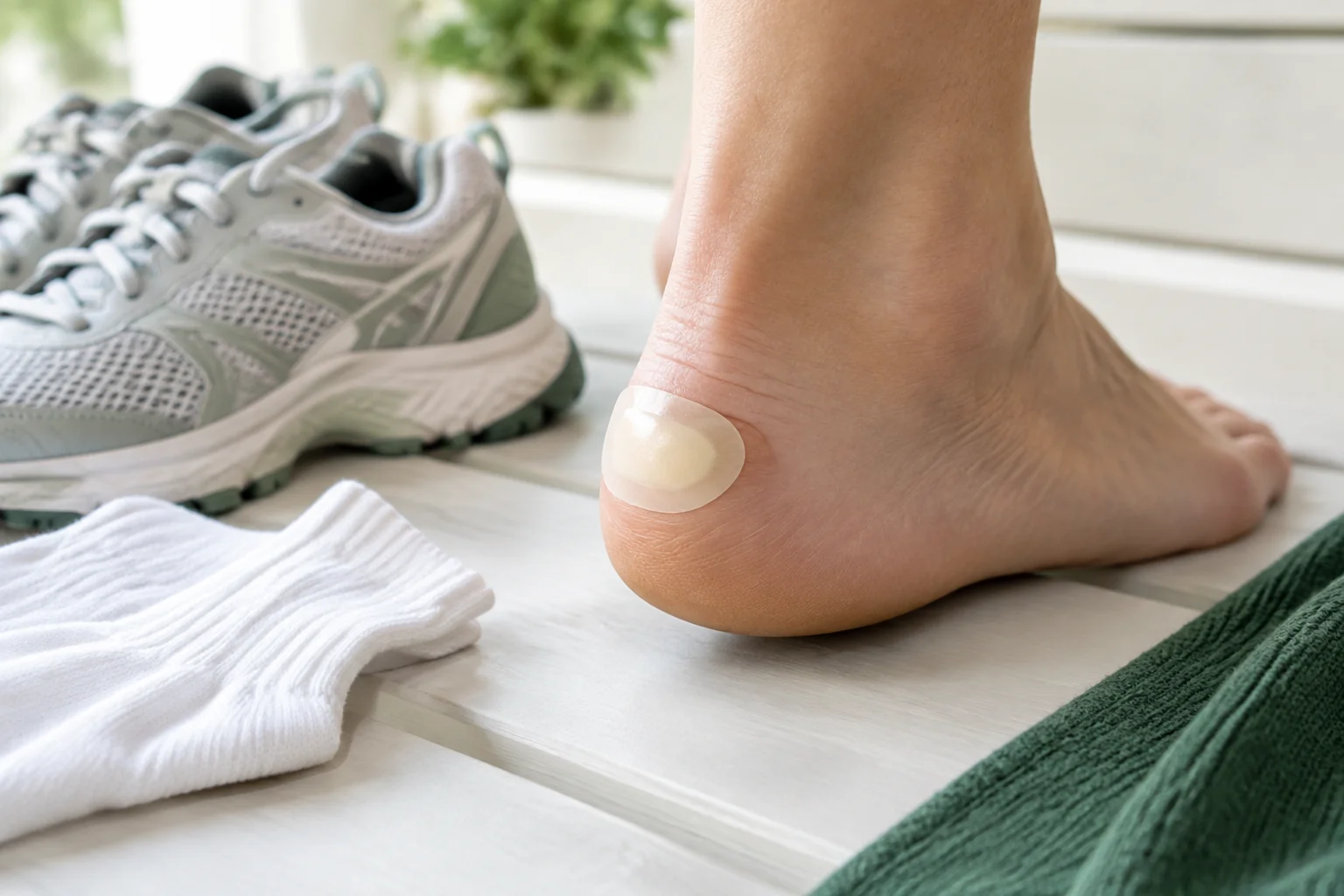
A friction blister is a small pocket of fluid under the skin, often caused by shoes rubbing. Keep it clean, protect it with a soft dressing and stop wearing the shoes that caused it until it heals. Do not burst it yourself. A hot blister, pus, spreading redness or severe pain needs prompt medical advice; seek help early if you have diabetes or poor circulation.
Protect the skin while it heals
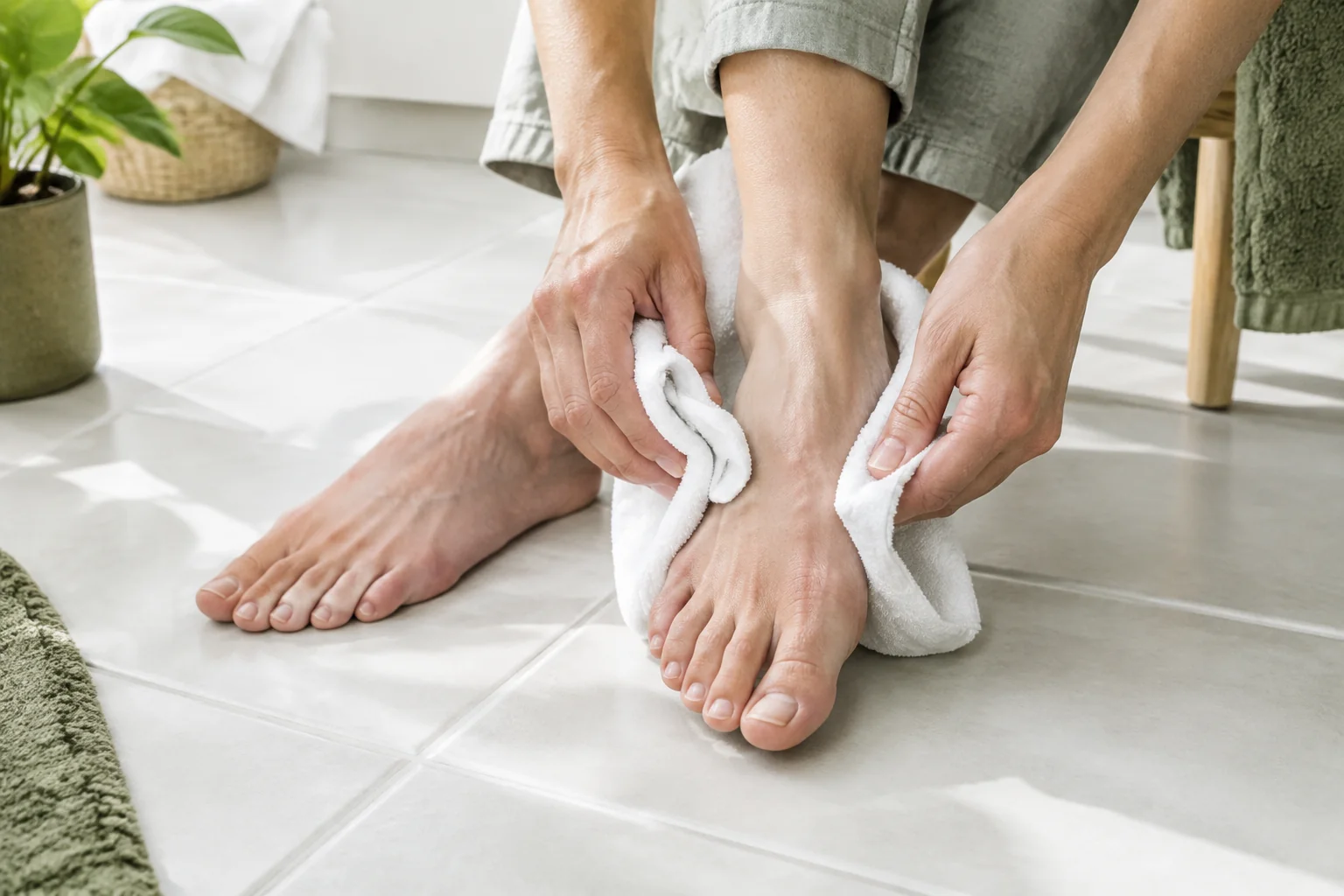
Gently wash the area and pat it dry. Cover it with a soft plaster or padded dressing. A pharmacist can advise on a suitable dressing. Do not burst a blister, peel away the skin or pick at its edges. If it has already burst, wash your hands, allow the fluid to drain and cover it with a dressing.
Avoid the shoes or equipment that caused the rubbing until the blister heals. Wear comfortable, well-fitting shoes and introduce new shoes gradually. Change socks when they become damp.
When a blister needs medical attention
Seek prompt medical advice if the area is hot, contains yellow or green pus, becomes increasingly red or swollen, is very painful or keeps coming back. Blisters caused by burns, scalds, an allergic reaction, or several blisters appearing without a clear cause also need medical advice. Spreading redness, fever or feeling very unwell needs urgent assessment.
If you have diabetes, reduced sensation or poor circulation, a new foot blister needs prompt advice from your healthcare team. Do not wait for pain or for a routine appointment, and do not try to drain it yourself.
Assessment in Vouliagmeni
For recurring friction or footwear concerns, call or email the clinic to discuss an appointment with Tonia Kyriacou. An examination helps decide whether podiatry care or referral is appropriate. The practice is not an emergency service.
Common questions
Should I pop a foot blister?+
No. Keep the skin intact where possible, protect the area and ask a healthcare professional if it is large, painful or infected.
What if I have diabetes?+
Contact your healthcare team promptly about a new blister. Reduced sensation and circulation can make a small injury more serious.
Sources & further reading
This educational guide draws on the following patient-information sources. It has not been represented as a diagnosis or a clinically reviewed article.
General information, not a diagnosis. If your symptoms are urgent, seek prompt medical care.